Metalurgica La Farga: “Now we need to be very attentive and react fast”

La Farga is a family holding group which boasts over 210 years of history. It manufactures and sells semi-finished copper products and their alloys for the electrical, metal packaging, railway, tubes, automotive, billet and special conductor markets. In the face of the economic crisis resulting from Covid-19, the company has reacted by adapting to the requirements at any given time in order to guarantee service to all its customers and by adjusting the structure in order to do so at the lowest possible cost. “We have always prioritised the protection of the health of all our employees and implemented all necessary measures”, says Inka Guixà, La Farga’s general manager.

La Farga’s intention is to achieve the company’s sustainability in the short, medium and long terms. “Recovery will be slow. We work in different sectors; those that have been essential are the ones that have been best maintained, such as the copper wire that is used for the welding of tin cans, but for the sectors that rely on the distribution market, the impact has been much greater”, Ms Guixà asks.

For this family business, the current strategy is “to be very aware of the evolution of the markets and to react very fast as soon as demand revives“.

Rejection of the agreement announced by the Government

The Covid-19 pandemic has plunged our country into a deep economic crisis, whose direct effects on citizens and companies have only begun to manifest themselves.

In this context, the Family Business Institute (IEF) and the Territorial Associations of Family Business wish to express their rejection of the agreement announced yesterday by PSOE, Unidos Podemos and EH Bildu to repeal the labour reform.

Beyond the effect of the rectification by the Government itself, it is incomprehensible that an issue of such importance has been negotiated outside the appropriate political framework and, above all, behind the backs of social agents and companies. This is especially the case when, since the beginning of this crisis, we have all demonstrated our responsibility, commitment and ability to reach agreements that safeguard as many jobs as possible.

The repeal of the labour reform would have highly negative effects on employment and economic recovery. Moreover, it would be considered by EU institutions as a huge step backwards and would seriously jeopardise the essential support that our country needs from Europe at this time.

Any measure taken in the field of the relations governing the labour market must be the result of a broad political and social agreement and its focus must inevitably be on the long term. It cannot be allowed to be a bargaining chip that facilitates the voting of a one-off agreement in Congress.

Restaurant 7 Portes: “These weeks have been really tough but family businesses know how to adapt and survive”

Restaurant 7 Portes, a gastronomic benchmark of the city of Barcelona and recognised internationally, is a family business run by Francisco Solé Parellada that has been connected to his family for over 200 years. “Shutting because of the State of Alarm was one of the toughest moments of our lives,” he says. “I was born in the restaurant and it is has a big part in my life story.

Now, with the restaurant ready to reopen, these past weeks have allowed him to reflect on “what we do and how we do it. And also how we will do it from now on”. This is a process in which the whole family and the restaurant team have taken part. Despite the difficulties, Mr Solé says that the process has been “very encouraging.”

The restaurant owner believes family businesses know how to adapt and survive. “That’s why we have already planned the opening according to how the situation develops,” he says.

TV3 canvasses ASCEF’s opinion on the state of family businesses during the COVID-19 crisis

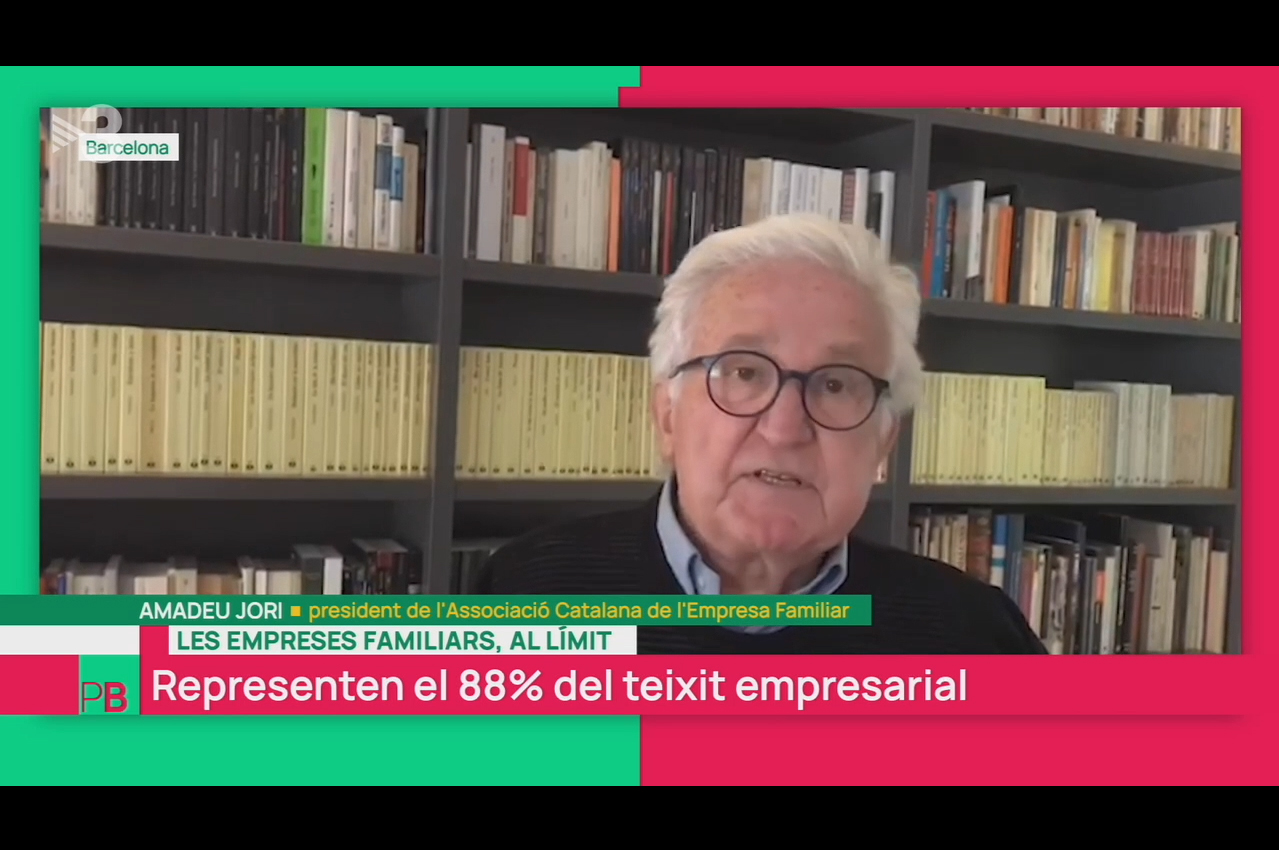
The Planta Baixa programme on Catalan station TV3 has discussed the situation of family businesses in the region with regard to the current pandemic and has canvassed the opinion of ASCEF as the entity that represents them. Amadeu Jori, ASCEF’s President, highlighted the power of family businesses in the economy “because if family businesses fail, the wheels of the economy stop turning and the country falls apart.” Mr Jori also said that 2020 “will be a very tough year” as according to official data “86% of companies have seen their activity reduced during the pandemic and 42% of these have suffered falls of over 60%“.

Founded in 1998, the ASCEF comprises over 100 companies that represent the Catalan business community. These companies play an important role in the country’s economy as they are committed to wealth creation, employment, the region and sustainability. The COVID-19 crisis has only reinforced this commitment to employment, sustainability and the well-being of society.

The ASCEF predicts a new scenario after COVID-19 where industries will compete more over quality than price

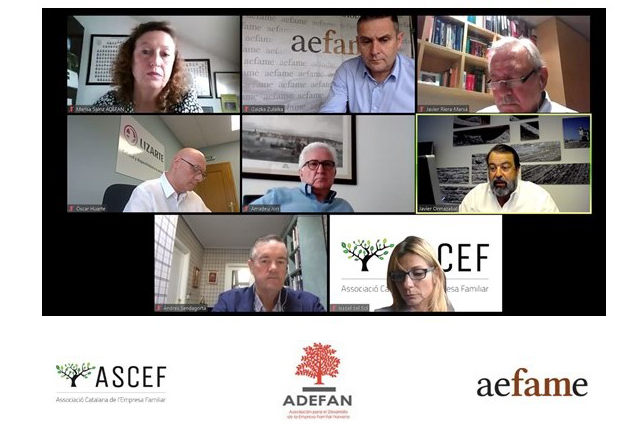
The Catalan Association of Family Businesses (ASCEF) believes that, in the wake of COVID-19, family businesses in the industrial sector will be able to position themselves in more demanding markets where reliability and quality are valued higher than price. In an online meeting organised by the family business associations of Navarra (ADEFAN), the Basque Country (AEFAME) and Catalonia (ASCEF), employers agreed that these opportunities will appear “as long as the industry is prepared for this new scenario“.

In the view of the ASCEF President, Amadeu Jori, “in the past 30 years, the industrial sector in Spain has always been the ‘ugly duckling’ of the economy and its strategic value has not been taken into account, leading it to trail the service sector. The current crisis has highlighted how important it is for a country to have a competitive and modern industry.

Javier Ormazabal, the President of Velatia, Javier Riera-Marsá, the CEO of Radar Process (the Coemba Group) and the President and CEO of Lizarte, Óscar Huarte, spoke at the meeting. This forms part of the “Family Business shares” cycle, which is jointly organised by 18 territorial associations from all over Spain and brings together 1,200 companies.

The employers agreed that foresight in ensuring company liquidity, commitment to internationalisation and the flexible application of temporary lay-offs (ERTE) were key factors in ensuring the continuity of the business idea. “We have to learn to move differently and grant our people a very high level of autonomy,” the President of Velatia said in this regard. Likewise, the issue of investments also arose during the debate. Here, the CEO of Radar Process regards as essential time periods and confidence, elements that will only be possible when a vaccine is available.

With regard to the possible state of global supply chains, the participants displayed optimism about the role that Spanish industry can play. “Many opportunities will emerge from this crisis and we must be ready,” Mr Riera-Marsá said. This idea was shared by Javier Ormazabal who believes there will be acceleration of the process that was already ongoing about whether the concentration of suppliers was adequate. “Spain has the opportunity to position its industry in some fields in which we have been working for years because reliability and quality will be valued more than cost,” he said.

Mr Riera-Marsá added that: “Spanish industry must be committed to restructuring in order not to have to depend so much on abroad for necessary products in a situation similar to the one we are enduring.”

Finally, asked about the active policies that the Spanish Administration should pursue to assist companies in their reactivation process, Mr Huarte called for aid for investment, for the new business alliances that may arise, or for the maintaining or increasing of employment. In this regard, “the Administration should consider us as key allies whose purpose is to create value,” he stated in reference to the long-term vision, the commitment to employees and the solvency that has always been displayed and characterised by family businesses.
Eight of every 10 family employers trust in their capacity to create new opportunities in the crisis

Manuel Bermejo, a renowned expert in family business and the founder of The Family Advisory Board (TFAB), last week presented the results of a survey of over one hundred family businesses in an online meeting organised by ASCEF with the employers of the associations of Catalonia, the Balearic Islands, Asturias and Navarra. The survey found that 81% are confident of being able to create new opportunities, while 54% said that they had modified their long-term policies in the face of the economic crisis caused by Covid-19.

In addition, 44% of respondents said they are aware of the need to redefine their crisis scenarios, while 38% believe that they should better analyse their map of possible future risks.

With regard to the return to normality, 46% believe that this will take between two and three months, while 29% think that it will take at least six months.

In this context, Mr Bermejo recommends that employers should begin to identify the action that may enable them to emerge stronger from the current crisis. He also encourages them to rethink their corporate strategy for this new normal, evolving their business model and preparing a scenario for the end of 2020.

In Mr Bermejo’s view, family employers should also improve the corporate governance of their companies and strengthen family councils to ensure cohesion when taking difficult decisions, taking care to involve the various generations.

Given the present situation, the founder of TFAB highlights the importance of empowering and caring for the human teams of companies by applying hygienic and health measures, undertaking health policies among workers and empathising with the situation.

In Mr Bermejo’s view, “it is a time for people, values and committed organisations”.

The ASCEF and the IEF reaffirm their commitment to employment, sustainability and welfare

The ASCEF has reaffirmed its commitment to employment, sustainability and the well-being of society in the face of the COVID-19 crisis. The entity established in 1998, which is linked to the Family Business Institute (IEF) and comprises over 100 companies representing the Catalan business community, highlights in an official video the role played by family businesses during the pandemic. Companies have maintained activity whenever possible and applied the necessary safety measures to protect workers; they have placed their productive capacity at the disposal of the government and used their international networks and logistical capacity to transport medical materials. Family businesses have also made altruistic donations in an attempt to alleviate some of the hardships arising from the crisis.

Family businesses in Spain that form part of the different territories linked to the IEF have also expressed their willingness to reinvent themselves and adapt to the new normal. The aim is to maintain and boost employment and continue to help improve the general situation.

Despite the difficulties, half of family businesses have limited the fall in employment to less than 20%

Eighty-six per cent of family businesses state that their activity has dropped, with 42% saying that they have experienced falls of over 60%. These are among the results of a Bank of Spain report released today in which ASCEF participated by canvassing the opinions of its members. Almost a third of the companies surveyed say that they will suffer a decrease in profits of over 80%. Despite this, almost half of them have managed to reduce the fall in employment to below 20%.

Family employers regard government measures as insufficient, although the most popular are the facilities for the temporary adjustment of employment, the special financing lines (ICO), the guarantee lines and public guarantees and the deferral of tax debts.

The Bank of Spain estimates that the disruption of this year’s activity and employment “will be very severe” but that it will be mitigated to some extent by measures aimed at providing short-term liquidity and income. According to these calculations, the public deficit in 2020 may be within a range of approximately –7% to –11% of GDP. Meanwhile, public debt this year could be between 110% and over 120% of GDP approximately.

ASCEF members, serving society during the COVID-19 pandemic

April 2020.- In the current situation, many companies have become allies of the groups most exposed to the coronavirus and are acting to support the most vulnerable citizens. Family businesses, which are especially committed to their environment, are a good example:

The pharmaceutical company Almirall has launched an action plan containing a number of measures to respond to COVID-19 and assist health professionals. These include the donation of protective equipment (masks, gloves and gowns, among others) and topical creams to reduce dry and damaged skin due to the prolonged use of masks and disinfectants. The company has also partially modified its production facilities in order to manufacture antibacterial gels. It also plans to collaborate with the Leitat Foundation to develop ventilators manufactured using 3D printing for hospitals and intensive care units.

Meanwhile, Girbau, the company for comprehensive professional laundry solutions, has provided the Clínic hospital in Barcelona with a portable washing machine to help with the task of cleaning and disinfecting textiles. This machinery washes and disinfects daily up to 720 kg of medical staff clothing and tests the behaviour of materials when they are being washed.

The dermocosmetic company MartiDerm has given the Red Cross 2,500 units of the MartiDerm Covid-19 Dermatological Support Kit. This consists of three products: a hydroalcoholic disinfectant gel, an intensive hand cream and three cream patches for tired legs.

For its part, Cacaolat, a company that is 50% owned by Damm, has provided 60,000 bottles of cocoa and milk shakes to a variety of organisations to help alleviate the effects of the situation and express its gratitude to health personnel for their efforts. Donations have been made to associations such as the Food Bank, the Red Cross, Caritas, the Barcelona College of Physicians and a number of groups from healthcare institutions.

Carolina Herrera, which is owned by the Puig group, has adapted its tailoring production line in the town of Vacarisses to make gowns and masks for healthcare centres and the food industry.

You can see other examples of solidarity and good practices by ASCEF members.

At times of crisis, family businesses are more adaptable and demonstrate the strength of united leadership

April 2020 / The Covid-19 pandemic is producing a crisis in which family businesses will have crucial role to play given their quantitative economic importance. They account for 88% of all private sector companies, contribute 69% of the Value Gross Added (VGA) and generate 76% of jobs. In the current situation, family businesses take decisions to adapt and pivot their businesses accordingly.

The family spirit of companies, according to Pilar Marquès, Director of the Chamber Chair in Family Business at the University of Girona, one of the five chairs in Catalonia sponsored by the ASCEF, provides characteristics that are not to be found in other companies. These include unity of leadership, experience accumulated over the years and by previous generations and the ability to adapt and discover resources in the face of difficulties.

Given the current circumstances, the difficulty of the environment reduces possible differences between family members and mobilises family owners towards company changes in order to withstand obstacles. “Owners consider their company to be more than an investment. They are capable of taking decisions that are not financially optimal but, socially and emotionally, they are the ones that maintain their responsibility and pride in being entrepreneurs,” Ms Marquès explains.

In family businesses, owners regard responsibility for their decisions more personally,” she adds, while “difficulties awaken a fighting spirit and resilience more than in non-family companies.”

The experience accumulated in family businesses over the generations provides good strategic detection: it helps to better understand the environment and the magnitude faced, as well as possible solutions. Furthermore, family businesses are capable of finding solutions to their limitations and possess advantages in assigning their resources to new functions.

If you need more information contact us ascef@ascef.com