The Family Business asks the political groups not to delay the investiture and start Catalonia’s economic recovery

  • Entrepreneurs think that a solid government is essential for an agile and efficient management of the Europeans recovery funds.
  • Almost 70% of family businesses believe they face a weak growth this year, and 53% do not expect improvements until next year.
  • In 2020, 85% of entrepreneurs saw their turnover reduced.

Barcelona, 03/18/2021 – The Catalonian Family Business Association, ASCEF, asks the political parties represented in parliament to work hard towards an agreement to propose a candidate to preside over the Generalitat de Catalunya and not to delay the president’s investiture, because enterprises need a stable and solid government in the face of a situation caused by a year of pandemic. “It is time to pool forces, think about the good of society and enterprise as a whole, work so that the European funds become a real transformation tool“, stated Amadeu Jori, ASCEF President.

For the family business sector, Catalonia is risking its economic future under these circumstances, therefore it is critical to reach a consensus to form a government and that the parties can reach agreements to decide “which projects are to be propelled and how to manage that funding. We have a big challenge ahead of us and the political class should be up to it“.

According to ASCEF, the response of the political class is often confusing and contradicting” and the essential aspects that drive progress and competitiveness are set aside among the different political groups’ priorities.  “The turbulences between Madrid and Barcelona, as well as the tensions among the different Catalonian political parties, cannot rein in the recovery we need.  In a crisis situation, it is necessary to act with utmost responsibility and focus on common priorities“, asserts Jori. For the Catalonian enterprise sector, it is not only necessary to have a facilitating agreement for the arrival of the European funds, but also to focus on tax reform and the increase of aid packages.

In this sense, family business entrepreneurs demand again to be taken into account in order to identify and lower barriers that put companies’ survival at risk. Based on the data available to the Catalonian family business sector, entrepreneurs rate the current recovery scenario at 4 out of 9. For 68% of them, businesses face, in the short term, a feeble growth without job creation, and 53% don’t expect improvements until next year.  During 2020, 85% of entrepreneurs saw their turnover reduced.

The Catalonian Association of Family Business is an entity made up of over 100 companies that represent the Catalonian business fabric and play an outstanding role in the country’s economy thanks to their commitment to wealth creation, employment, sustainability and the region. Family business in Catalonia constitute 88,3% of private enterprises, provide 69% of the Net Value Added (NVA) total and create 76% of the private sector jobs.

ASCEF and Netmentora collaborate to provide exposure for entrepeneur women

  • Both organizations agree on asserting that there is no competitiveness without diversity and on the need to generate enabling initiatives.

Barcelona, March 8th, 2021.- The Catalonian Family Business Association (ASCEF) and the largest European network of business leaders, Netmentora Catalunya, collaborate to propel female entrepreneurship and normalize its involvement in business. For both organizations there is no competitiveness in business without diversity; we should continue to demand that administrations carry out actions that facilitate reconciliation and further an egalitarian education; it is also important to promote female paradigms to overcome restrains and stereotypes enduring in society.

Netmentora Catalunya, a high-impact international business organization that, free of charge, walks entrepreneurs through the process of strengthening their business, has had the initiative of putting together a decalogue to propel and support women entrepreneurs valuing female talent and a different management approach.   This decalogue has been subscribed by ASCEF, which will disseminate the proposal among its associates.

On the other hand, ASCEF, a body consisting of over 100 family businesses representing their own activity lines, has been one of the first business organizations to put into action a work group made up of 30 companies in order to bring about initiatives to help provide exposure for women entrepreneurs, both by sharing personal and business experiences and by favoring their active involvement in the public sector.

According to the head of the ASCEF group “Anem a compartir”, Ana Fisas, “promoting gender equality in entrepreneurship, is not only limited to empowering women by strengthening their capabilities, confidence and leadership, but it also involves generating enabling initiatives and acting proactively towards positive changes for society as a whole.”.

In the opinion of Beatriz de Vicente, Director General of Netmentora Catalunya,“we need more women on the network and more female paradigms within the business world. We want to bring the knowledge and interest of business entrepreneur women, because we think that helping future businesses and making an impact should be based on diversity and equality.”

Based on a variety of studies, the gap between entrepreneur women and men has been narrowing over the last years, although we still fall behind other European nations.

Putting an end to all forms of discrimination is essential for a sustainable development. An adequate management of diversity transforms differences into a source of opportunities in any environment and allows for a responsible management that ensures equality. This is a challenging reality that we should address from an institutional compromise at every process and level.

ASCEF endorses the manifesto “It’s enough. Let’s focus on recovery.”

The Catalonian Association of Family Business (ASCEF), has adhered to the manifesto “It’s enough. Let’s focus on recovery“, along with over 300 entities representing the Catalonian economic, entrepreneurial, social, cultural and sports spheres.

The underwritten manifest demands a Catalonian Government (Govern) that can advocate for productive economy, employment and welfare status, with social cohesion as its main goal. In addition, a Nation Agreement is proposed for the economic and social recovery of Catalonia while urging the Spanish Government to provide direct aids for companies, self-employed workers and the sectors most impacted by the pandemic.

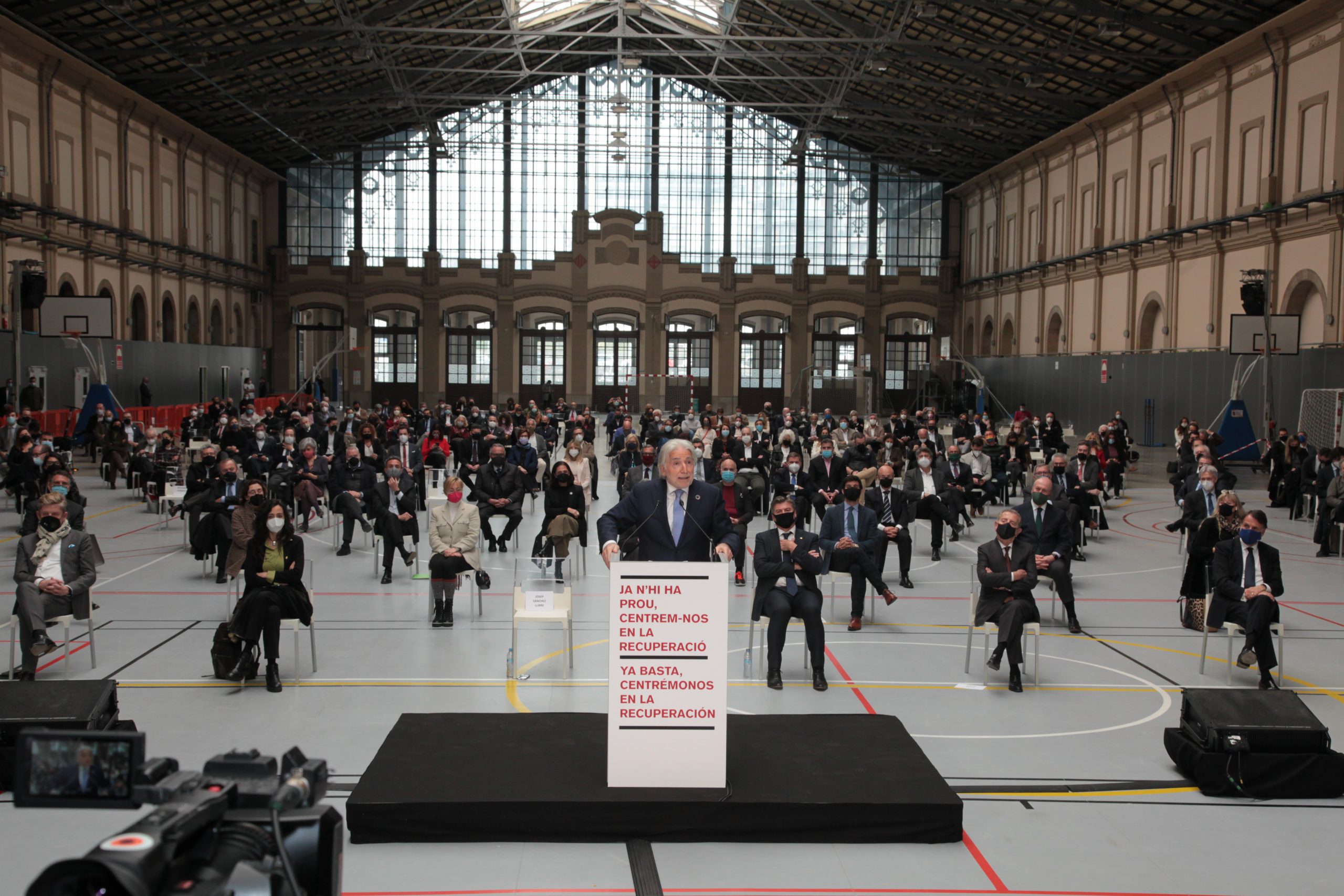
The joint statement was motivated by the acts of vandalism that occurred in Barcelona and other Catalonian cities late past February, and it comes as a clamor for non-violence.

On Thursday, March 4th, a reading of the manifest took place during a joint act at Estació del Nord, in Barcelona, attended by the ASCEF President, Amadeu Jori, on behalf of the Association. Among the Catalonian organizations that subscribed the manifest are Foment del Treball, Pimec (both promoters of this initiative), Barcelona Oberta, the Economic Circle, Femcat and Turisme de Barcelona.

The manifesto is available at the following link in the private space of the ASCEF website.

“The Chief Financial Officer is becoming a standard and a backbone for the family business strategy”

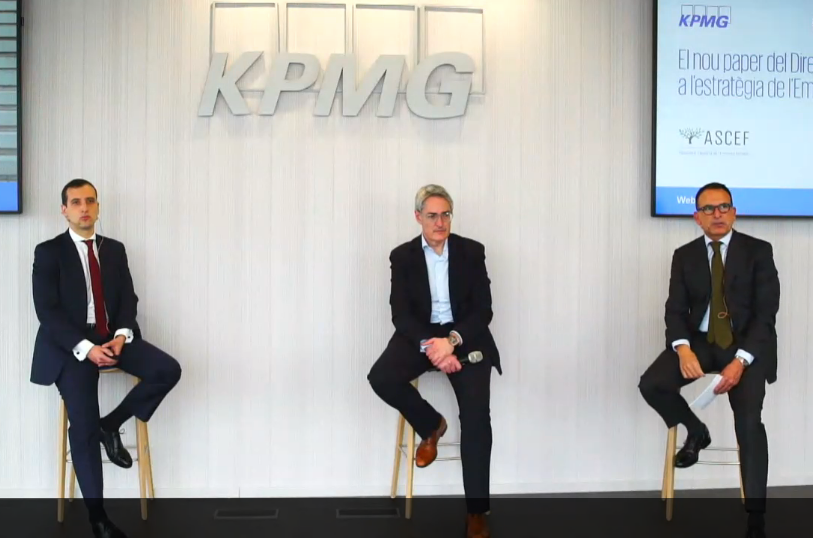
In the current context, the Chief Financial Officer (CFO) figure is taking on a new role within the family business having a direct impact on decision making about implementing a strategy. This new role was the focus of the session organized by the Catalonian Family Business (ASCEF) in collaboration with KPMG, called “The New Role of the Chief Financial Officer in the Family Business Strategy”.

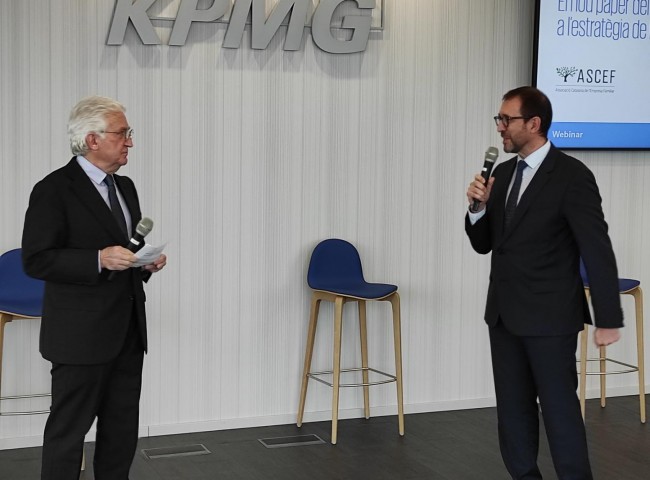
During the welcoming address, ASCEF‘s President, Amadeu Jori underscored the importance of a customized financial department embodied in the figure of its leader: “The Chief Financial Officer is becoming a standard for the family business; finances are already a backbone for the company’s strategy“.

Throughout the session, Alfonso Junguitu, Eduard Pereira and Fernando Ramos, associates and director respectively from KPMG’s Turnaround, Transformation & Working Capital Department, explained how and why the Chief Financial Officer, beyond their traditional role, is assuming a new role as the CEO’s ally when making decisions on strategy implementation.

Fernando Ramos reminded that the CFO “is a figure that always gains size in time of crisis, since he knows the strategy and knows how to calibrate liquidity“, who, in the current context and circumstances, is someone who “takes into account the lessons learned from the previous crisis, which help today’s companies be more resilient.”

Amadeu Jori, president de l'ASCEF
Amadeu Jori, during the welcome to the session

It is important that the Chief Financial Office gets involved in what it is being done and may be able to take part in decision making about all areas and departments“, explained Alfonso Junguitu, who noted that “the cashier is not something intangible.”

Meanwhile, Eduard Pereira stated during the session that “it is important to be able to be more efficient in management,” for which the CFO figure is essential. “At an operative level, the Chief Financial Officer has an impact on 4 spheres: demand forecast, stock management, production planning and production management,” revealed Pereira, who afterwards proposed different financial solutions for each of the spheres.

However, in most cases the solution involves a transformation plan for which “there is no unique recipe, but that needs to be adapted to each case” while following 5 key points: revisit mid to long term strategies, evaluate talent, completely reassess cost structures, resilience in supply chains and capital structure. Just as Junguitu highlighted, these changes in the company “need to be sped up by the CFO, since he knows the strategy using liquidity and turnover control and preparing for different temporary scenarios.”

Wrapping up were Joan Griñó and Fernando Pérez, Corporación Griñó‘s CEO and Chief Financial Officer respectively, who explained the company’s experience at integrating financial teams in order to reach a strategy.

“Succession should be addressed with care, not out of improvisation or emotional impulses”

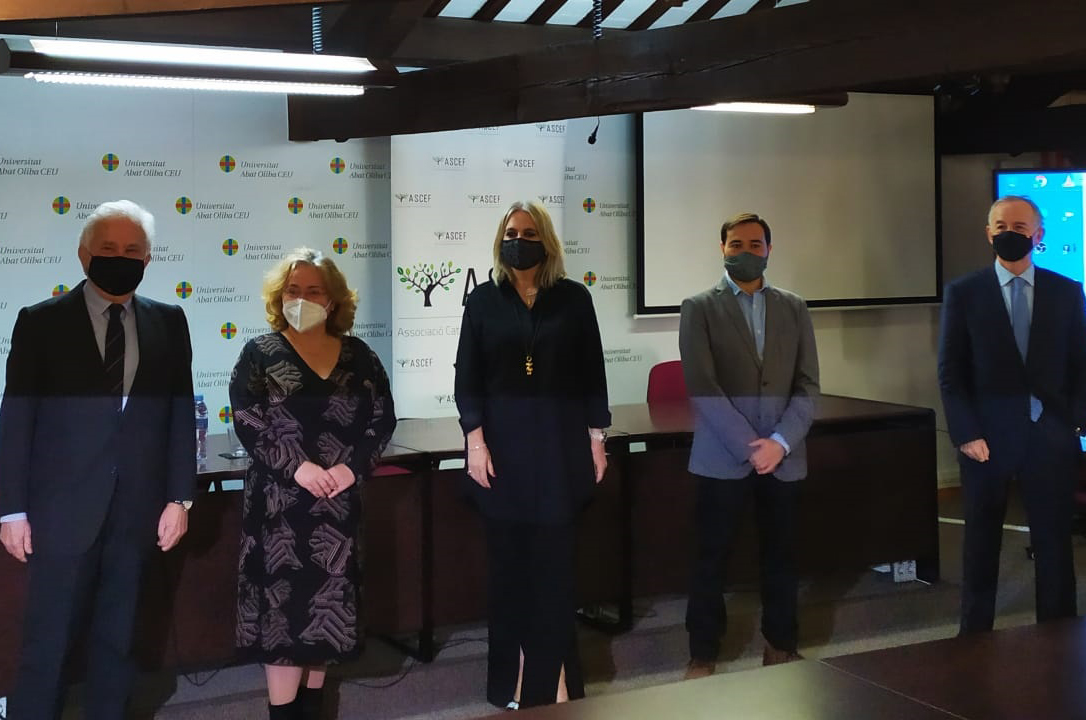
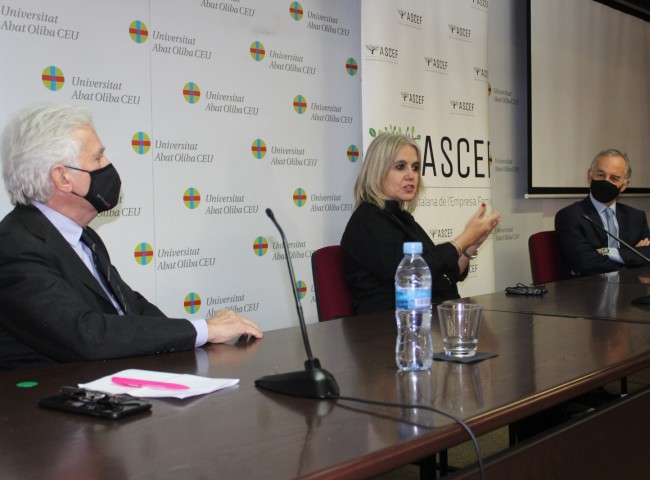
Succession is a sensitive moment in any organization, since it is intended to ensure the continuity and development of the legacy maintaining a balance among family, ownership and business.  With this proposition, the Catalonian Family Business Association (ASCEF), organized a conference entitled “Family Businesses Before the Succession Challenge”, with the collaboration of the University of Abad Oliva CEU and the participation of TOUS Corporate Vice-president, Rosa Tous.

Succession is a sensitive moment and needs to be addressed with care and not out out of improvisation or emotional impulses. It should be well prepared, for it is a process, where strategy, organization and governance must converge“, explained Amadeu Jori, ASCEF President. “Their main actors are not only the person leaving the position and the one succeeding him, but also the rest of the members of the stock holding family“, he added.

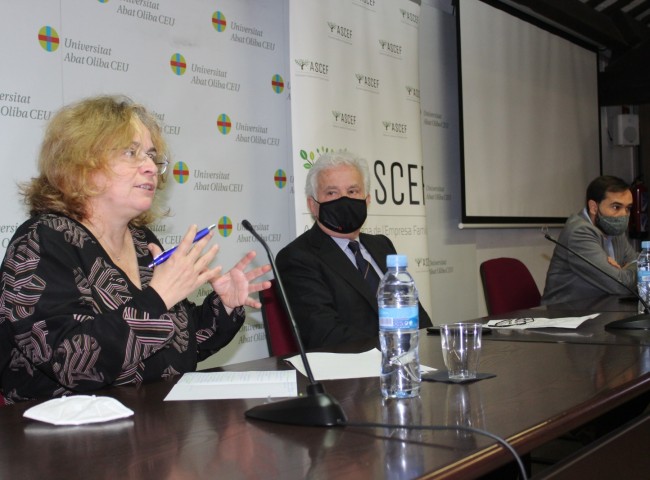
Dr. Camen Ruiz-Viñal and Dr. Ferando Álvarez-Gómez, director and subdirector respectively of the Department of Family Business and Company Creation of the University of Abad Oliva CEU, presented the report “Spanish Family Businesses Before the Succession Challange”, prepared along with other researchers members of international consortium STEP Project (Successful Transgenerational Entrepreneurship Practices), where it was noted, among other figures, that 70% of the today’s family businesses acknowledge not having a succession plan.

According to this study’s data, most of CEOs are baby boomers, 24% are women and 45% belong to the company’s second generation.  Dr. Álvarez-Gómez underscored that “succession plans prevent situations of conflict in the future“. However, he indicated that there is “a limited proactivity” in most businesses since “the business leader is expected to reach an age close to retirement“.

Meanwhile, Dr. Ruiz-Viñal thought that the COVID-19 pandemic “has entailed an acceleration in family business succession processes“.    She also added that millennials are increasingly being taken into consideration, since the pandemic has also accelerated businesses digitalization“.

Successió: ASCEF - UAO CEU
Dr. Carmen Ruiz-Viñal, during the session

TOUS Corporate Vice-president, Rosa Tous, took part in the conference “The Great Challenges of Family Business, moderated by Dr. Juan Corona, Academic Advisor for the Business Family Institute. Tous, who explained that fourth generation family members have started to enter the business, underscored that “in the family business, we want to build to endure“.

Tous indicated that, once the second to third generation succession was planned in 2008, “we set up a family council with the intention of working on behavioral matters involved in being a family business member, knowing that we have three roles: family, stock-holder and business executive“. “It is important to know how to interact within the company, differently as in family reunions, being aware that this involves a learning process“, Rosa Tous added.

Rosa Tous - ASCEF - successió
Rosa Tous, TOUS Corporate Vice-president

“The family counsel should conduct and supervise the professional management of family business assets”

Assets management in family business, the country’s main source of wealth and, was the topic analyzed in the show Diálogos at La Vanguardia, held last week with the presence of Amadeu Jori, President of the Catalonian Association of Family Business (ASCEF). Other participants were Josep Tàpies, IESE Professor Emeritus specialized in family business; Antoni Murt, EY Associate in Barcelona; José Alarcón, Andbank General Business Director in Spain and Pere Guardiola, Godó Strategies‘ CEO.

Amadeu Jori stated that most of the successful family businesses set assets growth as their priority goal in order to ensure their continuity in the future. In this way, ASCEF President acknowledged that professionalization is a recurrent debate among family businesses: “It means finding the best people to run the business, whether they are family members or not, both on a daily basis and among government bodies. There are more doubts in the field of assets management, but it is obvious that it is also necessary. However, it is never to be neglected, instead the management conducted by professionals should be watched upon closely“.

Much is said about the need to professionalize leadership and business management, but the importance of professionalizing assets management is not so valued, something that requires an appropriate specialization“, explained Alarcon, who advocates that assets management professionalization “is more important as family generations advance as it becomes more difficult to harmonize the interests of each family member“. “Family assets management must be aligned with the legacy, which constitute the set of values of each family business“, he added.

The main goal of family businessmen is always to think of the business and create business. The surplus is either invested on the business, on starting a new one or on current businesses” explained Amadeu Jori. ASCEF President favors the commission of assets management to professionals but insisted on the need for a very close administration and supervision by the family counsel.

Professor Tàpies deems it necessary to professionalize finance management, “but you need to let this professional know what is expected and define how much risk and volatility you are willing to assume“. “Watching over intangible family business assets is as important as doing it for financial assets“, he added.

Meanwhile, Antoni Murt regretted the lack of a legal and tax system specific of family businesses. He thinks that proceeds reinvestment and assets accumulation are not being protected, which is part of the family business strategy to prepare for the future.

You may access the whole article through this link: Dinero-LaVanguardia.

“Family businesses are better positioned to speed up the change and leverage on all opportunities”

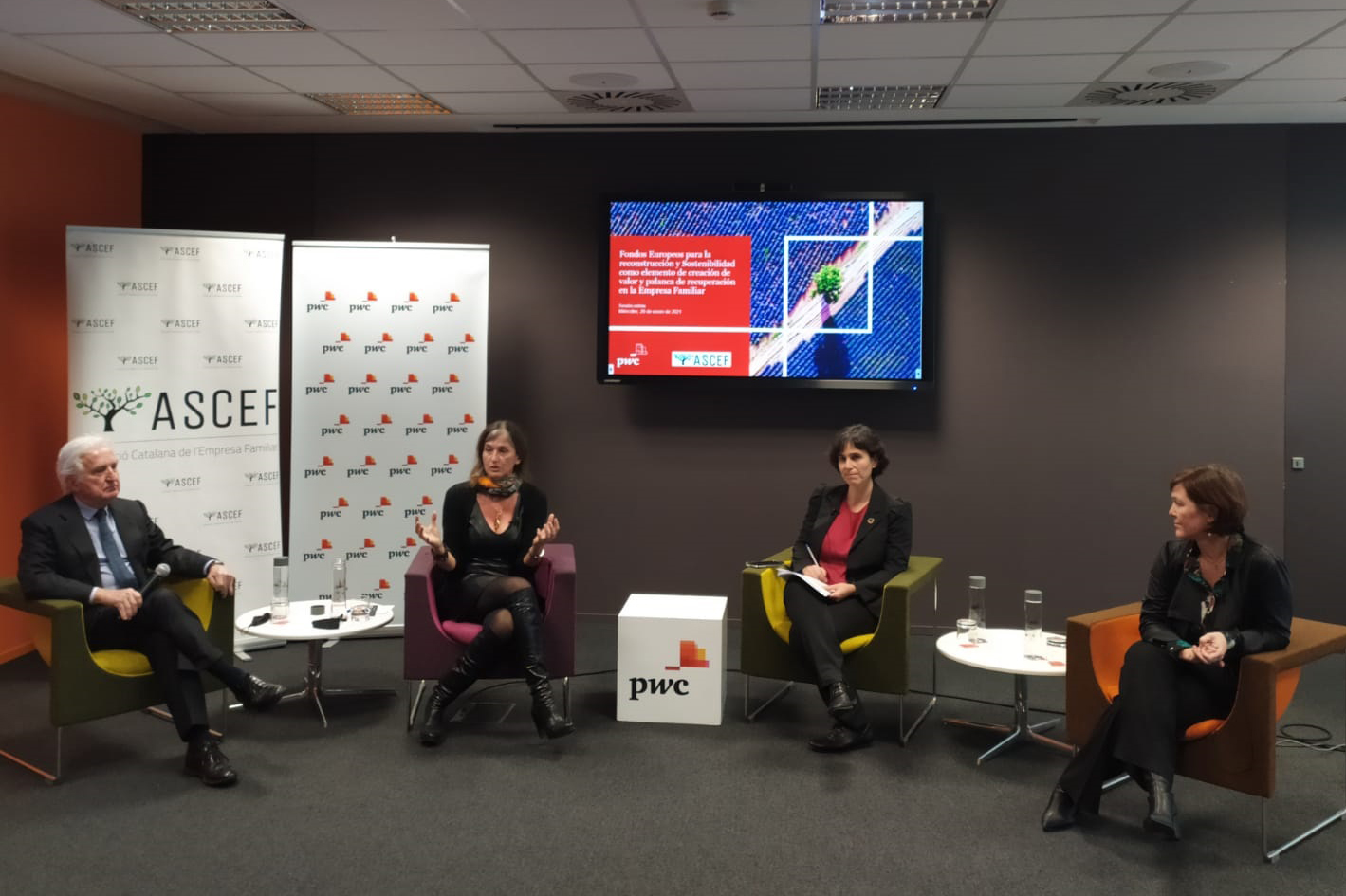
The Catalonian Family Business Association (ASCEF, acronym in Spanish) together with the PwC organized an online session called “Europeans Funds for Reconstruction and Sustainability as an Element for Value Creation and Recovery Leverage in Family Business”, which explore the topic of aids and financing alternatives involved in the European Recovery Plan (Next Generation EU), its benefits and implications, and how sustainability may help in identifying opportunities.

Anna Merino, PwC Strategy & Economics Director, and Marga de Roselló, PwC Sustainability and Climate Change Director, provided insights for the angles that conform sustainability and the different possibilities that the Europeans Funds for Reconstruction may offer for family businesses. An European Union Investment that will hinged on three pillars: Ecological Transition, Digital Transition and Reindustrialization.

Family Businesses start from a privileged situation to leverage on opportunities, because they share four priorities: networking, continuity assurance, which entails a long-term vision, faster decision making and community building, with greater relations with workers and regions“, stated Marga Roselló. “There will be no change without the family business“, she stressed.

Meanwhile, Anna Merino explained that “we do not start from scratch, since the European Funds have expedited the changes already planned for the next decade. We now face a complex economic situation, but with a need to solve the problem before it gets bigger.” She reminded that Spain will be one of the most favored countries (it will received €140 billion), but in compensation for that “the EU requests that the funds make it to the whole business fabric, to all industries.

All projects should prove their impact on the region’s economy“, Merino added. “Businesses have now the opportunity to plan and think about latent projects within the business, which may also bring a change in business culture in the ecological transition or digitalization, for example.

The session also included the participation of Mireira Cammany, Joint Director of EPI INDUSTRIES family of companies, who shared her experience in her company’s path to sustainability. Cammany reminded that the “2030 Agenda helps arrange actions and priorities.” She also emphasized that “sustainability is addictive; if we integrate it into the business, we are leaving a legacy of great impact and feasibility for the coming generations.”

Netmentora presents the ASCEF group Anem a Compartir with a Decalogue in support of female entrepreneurship

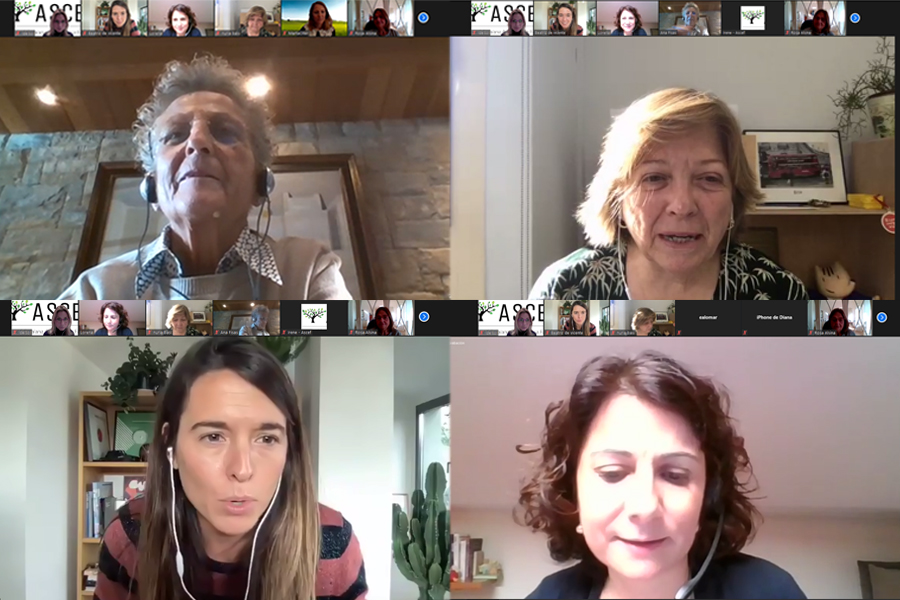
Anem a Compartir (Let’s Share), the women’s group of the Catalan Association of Family Businesses (ASCEF), held an online session on December 15 with Netmentora, an association that used the occasion to present a Decalogue containing 10 key points in support of female entrepreneurship.

The aim is to invite women and men to take a step forward and not replicate the model of company led solely by men. Currently, women make up only 20% of the business community. The Decalogue presented by Netmentora, the leading European non-profit association dedicated to helping entrepreneurs to consolidate their project with the support of a network of business leaders, is intended to be a practical tool to remedy the current situation.

The session was led by Ana Fisas, the President of the Anem a Compartir group. The participants consisted of Núria Basi, the President of Basi Group and Vice-President of Netmentora Catalunya, Beatriz de Vicente, the Director of Netmentora Catalunya, and Lorena Toda, entrepreneur and CCO of Leti Pharma. All of them highlighted the entity’s commitment to female talent and promoting the integration of diversity in the entrepreneurial ecosystem as a key value.

The 10 key points of the Decalogue are available at the following link in the private space of the ASCEF website.

Netmentora and ASCEF signed a collaboration agreement last January with the aim of collaborating in the identification of potential female and male entrepreneurs and employers who can benefit from the experience, knowledge and resources of the two organisations.

ASCEF members are invited to participate in the ‘AHORA’ programme and make their brands more visible

The members of the Catalan Association of Family Businesses (ASCEF) are invited to participate in the ‘AHORA’ programme, a project through which family businesses can receive a number of grants to give their brands greater visibility and thus reach a greater number of customers. The programme stems from the agreement signed between the Family Business Institute (IEF), to which the ASCEF has links, and Atresmedia Publicidad.

This project will provide almost 4 million euros in 54 grants for member companies of Spain’s different Territorial Associations that wish to launch an advertising campaign. Atresmedia will channel its resources and platforms -digital and TV- to help small and medium enterprises affected by the Covid-19 pandemic.

To access the programme, there are a series of requirements: companies should not have undertaken any commercial communication on television through Atresmedia, they should have fewer than 250 employees, they should have an annual turnover of less than 50 million euros and they should be a member of a Territorial Association, such as the ASCEF.

The ‘AHORA’ programme consists of assistance both in the broadcast and production of advertisements. It facilitates this access to companies that have not done so up to now. In addition, participating companies will also benefit from advisory services, monitoring, planning and post-evaluation of the campaigns.

ASCEF member companies that meet the requirements and wish to apply for grants have until January 15 to do so. From this date, a jury of experts will make its choice of companies in accordance with a set of conditions: the history and analysis of the family business, its values, its roots in the territory, its employee number, its age, its compliance with tax obligations, together with a qualitative analysis. Atresmedia has until January 30 to analyse the companies and decide on the awarding of grants before planning is to commence.

Information about the programme may be found in the private space of the website, where there are also answers to a series of frequently asked questions.

The registration form for the AHORA programme is available in the following link.

“The future is digital and will transform the way we work; innovation must be seen as long-term investment”

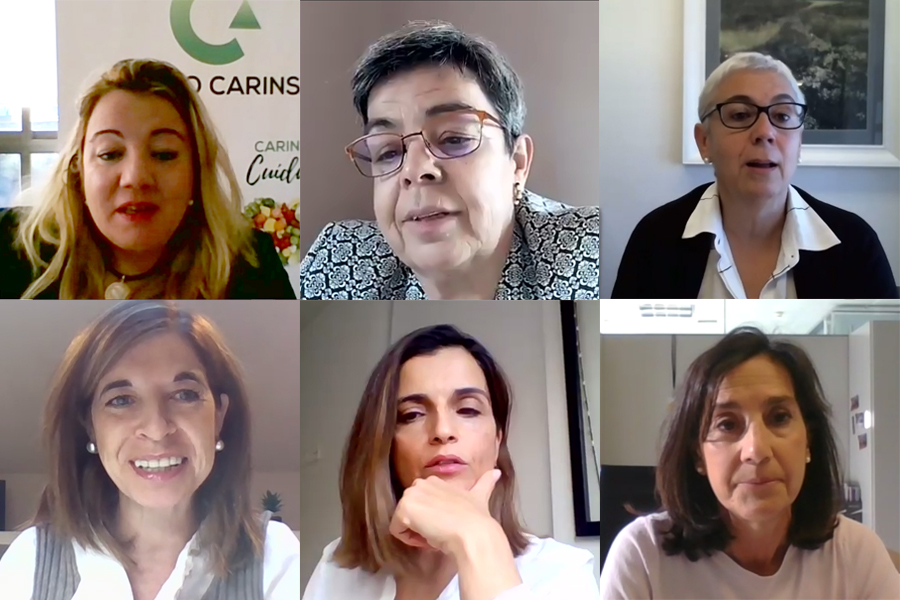
An online session held by the Catalan Association of Family Businesses (ASCEF) entitled “The culture of innovation in family businesses” featured a round table with Vanesa Martínez, the CEO of Grupo Carinsa, Mercè Girbau, the President and CEO of the Girbau Group, and Eulalia Alomar, the General Manager of Creu Blanca. The trio shared their experiences of innovation in the family business in a conversation moderated by Rosalía Soler, a partner at Ernst & Young.

The three businesswomen stressed that innovation was “day to day” and said that, despite being on the agenda of their respective companies, innovation and digital transformation have been driven” by the Covid pandemic. “This has led us to reinvent ourselves, especially in the sectors that have been most affected,” Ms Martínez said. At her side, Ms Alomar explained that “we have innovated in unforeseen aspects, re-adapting techniques“. “The pandemic has had a real impact on us; it has forced us to adapt to the new situation,” Ms Girbau added.

Innovation has been in our DNA since Grupo Carinsa was founded and this is about long-term investment,” Ms Martínez said. “We observe the work processes in order to apply the big data and thus be more efficient day-to-day, in addition to working on improving energy efficiency and waste management.” She added a maxim that they bear in mind: “If a family business wants to be innovative, leaders have to form teams of talented people and provide them with the necessary tools to innovate constantly.”

The future will transform the way we work and organisations in all areas,” Ms Girbau said. “It is necessary to commit to innovation in order to add value as a company. We approach the methodology of start-ups, and we develop different products to see how it can be applied to the market,” she explained. The President of the Girbau Group also called on the Public Administration for support “beyond that of a financial type, in order to create ecosystems and a tradition of innovation in society as other countries do.”

Meanwhile, Ms Alomar said that innovation is “day to day“. “Everything will be digital and information management will be essential. Processes have to be streamlined: they are all capable of being improved and we are increasingly heading towards more automation,” the General Manager of Cruz Blanca added. “We are working on two types of change: one to reduce ecological impact, both in terms of electricity consumption and waste management, and another to reduce the impact on the patient, thanks to digitisation, and we are seeking techniques that minimise side effects.”

The session, which enjoyed the collaboration of Ernst & Young, also featured two lectures. The first, entitled “Data as a source of innovation and growth in family businesses”, came from Beatriz Sanz, Advisory Partner of Ernst & Young. The second was “Innovating from tradition: how to preserve the family legacy and ensure the creation of value as a business family” by Cristina Cruz, the Academic Director of IE Center for Families in Business.

Ms Sanz recalled that “the origin of the family business lies in entrepreneurship and innovation.” She added that we can take advantage of the use of Artificial Intelligence “through efficient data management, business problem resolution, technological change and ecological application.” However, she recommended companies “to start small, with a small test to see what happens, how it evolves and thus apply it to other fields in the company.”

For her part, Ms Cruz highlighted the fact that “owners of family businesses have control of more than 50% of innovative companies” in order to combat society’s view that “a family business may be conservative, risk averse and less innovative. Aspects of ours that boost innovation must be transformed into competitive advantages and the negative impact that prevents us from innovating must be reduced,” she concluded.

If you need more information contact us ascef@ascef.com